Graph Notebook: A Comprehensive Evaluation for Researchers and Organizers
For individuals engaged in research, analysis, or data visualization, the Graph Notebook offers a structured approach to organizing thoughts, charts, and diagrams. This article explores the features of the Graph Notebook, its potential benefits, and situations where it may be a suitable choice.
What is a Graph Notebook?
A Graph Notebook is a specialized notebook designed for users who need to create and organize graphical representations of information. It typically includes pre-drawn grid lines, graph paper layouts, and other visual aids that support data plotting, mapping, and conceptual modeling. The Graph Notebook is available in multiple formats, including PDF and PNG, allowing for both physical and digital use.
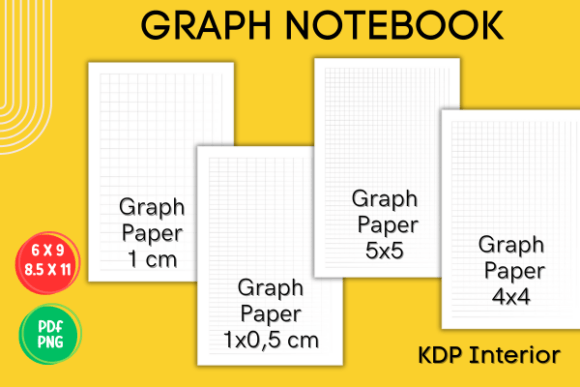
The product comes in two standard sizes: 6 x 9 inches and 8.5 x 11 inches, catering to different preferences and usage scenarios. Each notebook contains 100 pages, ensuring ample space for extensive note-taking and planning. The graph paper options include 1 cm, 1 x 0.5 cm, 5x5, and 4x4 grids, providing flexibility depending on the user’s specific needs.
Reasons for Interest in a Graph Notebook
Individuals interested in a Graph Notebook often seek a tool that supports visual thinking and structured organization. Whether working on academic research, engineering projects, or creative endeavors, the ability to sketch out ideas and visualize relationships can be invaluable. The Graph Notebook provides a consistent format for these activities, helping users maintain clarity and coherence in their work.
Users may also appreciate the variety of graph styles included. The 1 cm grid is ideal for detailed diagrams, while the 5x5 and 4x4 options are well-suited for simpler layouts or quick sketches. The 1 x 0.5 cm grid offers a middle ground, balancing detail with ease of use.
Benefits of Using a Graph Notebook
The primary benefit of a Graph Notebook is its ability to enhance visual organization. By providing a standardized layout, it helps users avoid the inconsistencies that can arise when drawing graphs by hand. This consistency is particularly useful for students, professionals, and researchers who need to present clear and accurate visual data.
The availability of multiple sizes and grid types ensures that the Graph Notebook can adapt to various tasks. For instance, a student working on math problems might prefer the 1 cm grid, while an architect could benefit from the larger 8.5 x 11 inch size for more detailed blueprints. The inclusion of PDF and PNG formats further expands its utility, making it accessible for both print and digital workflows.
Considerations and Tradeoffs
While the Graph Notebook offers many advantages, it is not without its limitations. Some users may find the pre-printed grids restrictive, especially if they require custom layouts or unique formatting. Additionally, those who prefer freehand drawing may feel that the structured nature of the notebook limits their creative flexibility.
Another consideration is the physical versus digital aspect. While the printed version provides a tactile experience, the digital versions (PDF and PNG) may be more convenient for sharing, editing, or storing large amounts of data. Users should evaluate which format best suits their workflow and accessibility needs.
Situations Where a Graph Notebook is a Strong Fit
The Graph Notebook is particularly well-suited for individuals who regularly engage in data visualization, mathematical problem-solving, or structured note-taking. Students studying subjects like mathematics, engineering, or design may find it beneficial for organizing complex concepts and diagrams. Professionals in fields such as architecture, urban planning, or scientific research could also benefit from its structured approach.
Additionally, the Graph Notebook is a practical choice for those who want to maintain a consistent format across multiple projects. Its 100-page capacity allows for long-term use, making it a reliable companion for ongoing research or creative work.
Situations Where Alternatives May Be Worth Considering
For users who require greater customization or flexibility, alternatives such as blank notebooks, digital drawing tools, or graphing software may be more appropriate. These options allow for more personalized layouts and advanced features that may not be available in a pre-printed notebook.
Users who primarily work digitally may also find that dedicated graphing applications or online tools offer more functionality than a physical notebook. However, for those who value the simplicity and portability of a physical notebook, the Graph Notebook remains a strong option.
Practical Decision-Making Insights
When evaluating whether the Graph Notebook aligns with your goals, consider your specific needs and workflow. Ask yourself whether you require a structured format for your work, or if you prefer more freedom in how you organize your ideas. Also, think about the type of projects you typically work on and whether the available grid options meet your requirements.
If you frequently work with data, diagrams, or visual models, the Graph Notebook can provide a valuable framework for your efforts. However, if your work involves highly customized layouts or digital collaboration, you may want to explore other tools that better suit your needs.
Ultimately, the decision to use a Graph Notebook depends on your personal preferences and professional requirements. By carefully assessing your needs and considering the available options, you can determine whether this product is the right fit for your work.