Kdp Cover Book Save the Wold: A Practical Guide for Authors and Designers
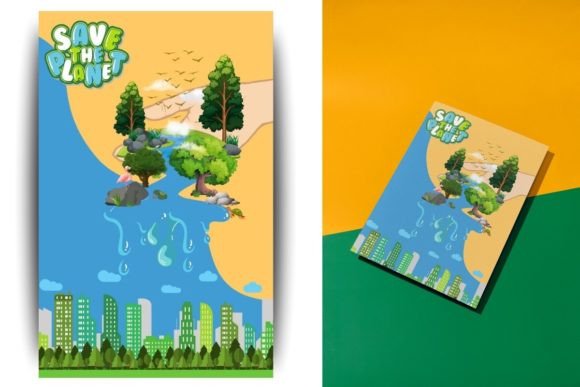
“Kdp Cover Book Save the Wold” refers to a specific set of pre-designed, ready-to-use cover assets created for authors publishing on Amazon Kindle Direct Publishing (KDP). Despite the intentional misspelling of “World” in the title—a stylistic or branding choice rather than an error—this product delivers three core deliverables: two high-resolution JPEG files (front and back/spine composites) and one print-ready PDF formatted to 8.5 × 11 inches. It is not a full manuscript, nor a design service, nor a template editable in Canva or Photoshop. Instead, it occupies a distinct niche: a turnkey visual solution tailored for fiction titles with global stakes, urgent themes, and ensemble-driven narratives.
What Sets Kdp Cover Book Save the Wold Apart
Most KDP cover resources fall into one of three categories: custom design services (costing $100–$500+), editable templates (requiring design software and time investment), or royalty-free stock image bundles (needing significant adaptation to meet KDP’s technical specs). Kdp Cover Book Save the Wold sits between the last two—it provides finished, publication-ready JPEGs that comply with Amazon’s resolution, bleed, and safe-zone requirements, while embedding thematic cohesion through its unified visual language: dramatic scale, implied motion, symbolic contrast (light/dark, human/abstract threat), and a muted but intense color palette often anchored in deep blues, burnt oranges, and stark whites.
Unlike generic “adventure” or “sci-fi” templates, this asset set signals narrative intention—not just genre. The imagery suggests urgency without relying on clichéd explosions or photorealistic aliens. Instead, it uses layered typography, atmospheric depth, and compositional tension to evoke a planetary crisis managed by diverse protagonists. That specificity makes it more resonant for readers scanning thumbnails on mobile devices, where emotional tone and genre clarity matter more than fine detail.
How It Compares Across Common Author Needs
Authors evaluating cover options typically weigh four practical factors: time, control, cost, and alignment with audience expectations. Here’s how Kdp Cover Book Save the Wold fits within that framework:
- Time efficiency: Delivery is immediate—no waiting for revisions, no learning curve with design tools. If your manuscript is finalized and you need a compliant cover in under an hour, this option meets that need directly.
- Design control: Minimal. You cannot adjust fonts, swap characters, or modify background elements. What you receive is fixed. That’s a tradeoff: speed replaces flexibility.
- Cost: Typically priced lower than custom work but higher than basic template subscriptions. It reflects the value of professional composition—not just stock assets stitched together, but a curated, balanced layout built for KDP’s display environment.
- Audience resonance: Strong for readers drawn to cinematic, morally grounded speculative fiction—especially titles where the “world” in question feels tangible, fragile, and worth defending collectively. Less effective for quiet literary fiction, historical romance, or absurdist comedy, where tone mismatch becomes immediately apparent.
Realistic Use Cases and Limitations
Consider Kdp Cover Book Save the Wold when your project aligns with its implicit narrative contract. For example:
- An indie author releasing a climate-thriller trilogy, with book one titled Save the Wold, featuring a geologist, a former UN negotiator, and a teenage coder racing to disable a destabilized geoengineering array. The cover’s scale and gravity match the plot’s scope.
- A writing group producing a shared-world anthology where all contributors agree on a unifying visual motif—here, the JPEGs provide consistency across multiple ISBNs without requiring identical designer involvement.
- A non-native English speaker prioritizing fast, compliant publishing over granular aesthetic control—especially if previous attempts with DIY tools resulted in KDP rejections due to margin or resolution errors.
Conversely, avoid it if your title demands precise visual storytelling—for instance, a mystery novel where the cover must hide a key clue in plain sight, or a memoir where personal photographs or handwritten elements are essential. It also doesn’t support variant formats: no EPUB cover version, no social media banner adaptation, no alternate color schemes for series branding. Those needs require either additional asset purchases or custom development.
Technical Fit and Format Considerations
The inclusion of a PDF at 8.5 × 11 inches signals intent for physical distribution—likely via KDP Print. That size accommodates standard paperback trim dimensions (e.g., 6 × 9 inches) with proper bleed and margins baked in. However, note that the PDF isn’t a layered InDesign file; it’s a flattened, print-optimized output. So while it saves time on setup, it doesn’t allow for last-minute text tweaks like adjusting subtitle kerning or repositioning the author name for better hierarchy.
The two JPEGs serve distinct roles: one is sized for KDP’s eBook thumbnail requirements (minimum 2560 × 1600 pixels, 1.6:1 ratio), ensuring clarity even when scaled down on search results; the other is optimized for paperback preview rendering (often 300 DPI, with spine width calculated for your chosen page count and paper type). Neither file includes transparent layers or vector paths—so editing beyond cropping or minor color correction isn’t feasible without degrading quality.
When to Choose Alternatives
Kdp Cover Book Save the Wold excels in narrow, well-defined conditions—but those conditions don’t apply universally. If your goals include:
- Brand scalability: You’re planning a five-book series and need consistent typography, character silhouettes, and seasonal color shifts—custom design or a dedicated template kit offers far more long-term adaptability.
- Niche audience targeting: Your readers primarily discover books through Instagram or BookTok, where vertical video covers or animated thumbnails perform better—static JPEGs won’t meet that need without supplemental assets.
- Accessibility compliance: You require alt-text-ready source files or need to verify contrast ratios for visually impaired readers—flattened JPEGs limit verification options compared to layered, labeled design files.
- Content sensitivity: Your story engages with real-world conflicts, cultural symbols, or historical trauma—using a pre-made cover risks unintentional misrepresentation without contextual input from subject-matter reviewers.
In those cases, investing in collaborative design—whether through a vetted freelancer, a small agency specializing in genre fiction, or a structured template library with documented usage guidelines—provides more durable, responsible, and audience-aligned outcomes.
Making the Decision Without Guesswork
Ask yourself three questions before selecting Kdp Cover Book Save the Wold:
- Is my manuscript complete, and am I confident in the title and subtitle as they stand? Since no text edits are possible post-purchase, finalization matters.
- Does the cover’s implied tone match how readers describe my beta feedback? Phrases like “felt urgent,” “made me picture the stakes,” or “gave me chills before page one” suggest strong alignment.
- Do I have bandwidth to troubleshoot KDP upload issues—or would a rejection delay derail my launch timeline? Pre-validated assets reduce that risk significantly.
If two or more answers are “yes,” this resource likely supports your goals efficiently. If uncertainty lingers around title phrasing, audience perception, or long-term branding, pausing to explore alternatives—even briefly—is a sound, low-risk step.
Final Perspective
Kdp Cover Book Save the Wold isn’t about cutting corners. It’s about allocating effort where it matters most: writing, editing, and reader engagement. For authors who’ve already invested deeply in narrative craft and now need a dependable, technically sound visual anchor—without opening a new learning loop or budget line—it delivers measurable utility. Its value lies not in novelty, but in reliability; not in uniqueness, but in functional precision. Used intentionally, it becomes part of a larger, thoughtful publishing strategy—not a shortcut, but a considered tool.