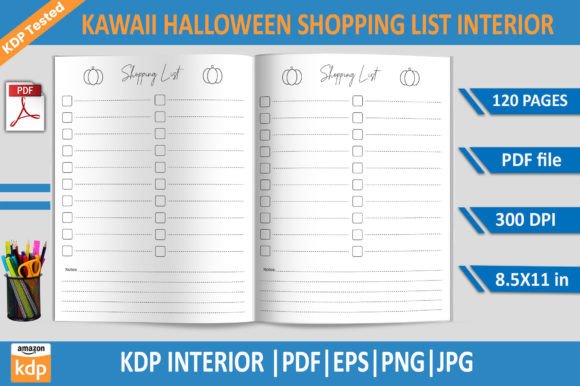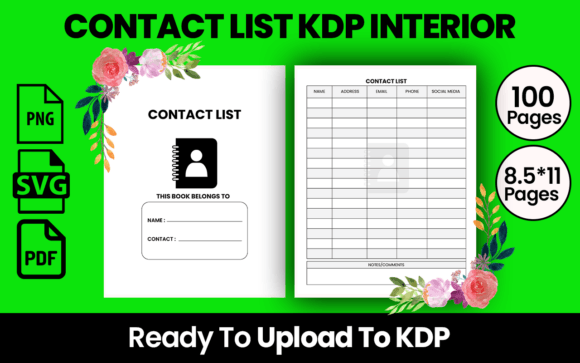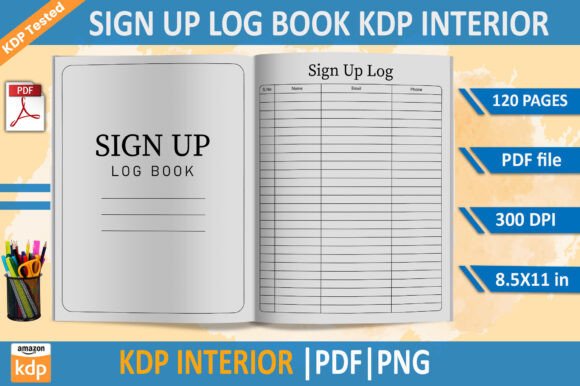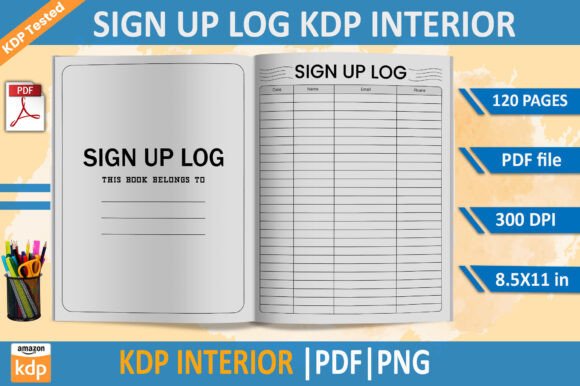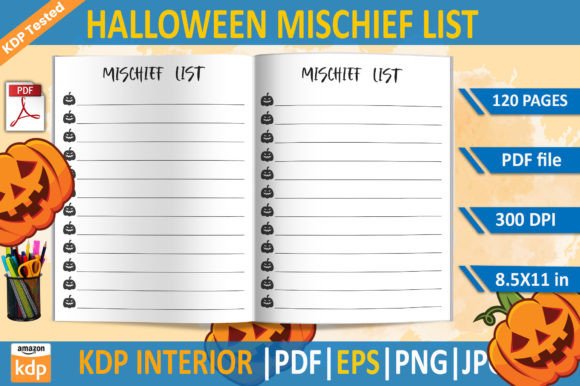
Halloween Mischief List KDP Template
The Halloween Mischief List KDP Template is a purpose-built, print-ready interior file designed for creators launching Halloween-themed activity books on Amazon Kindle Direct Publishing. It’s not a generic checklist or editable Canva graphic — it’s a production-grade asset tested against KDP’s live print requirements, optimized for speed, consistency, and reliability. At its core, this template supports a specific workflow: turning seasonal creative energy into a shippable, revenue-generating product — fast.
For professionals who regularly publish on KDP — whether educators building themed workbooks, marketers running holiday promotions, or indie authors expanding seasonal catalogs — the value lies in eliminating friction between idea and output. The Halloween Mischief List KDP Template removes guesswork around bleed settings, DPI compliance, margin safety, and page count alignment. That means less time troubleshooting printer warnings and more time refining content, designing covers, or planning your launch sequence.
How It Fits Into Your Publishing Workflow
This isn’t a standalone novelty item. It slots directly into an end-to-end publishing process — one that often begins with audience research, moves through content structuring and visual design, and ends with upload, proofing, and listing optimization. Where most templates stall at “editable,” this one bridges the gap between creative flexibility and print readiness.
Before you begin writing or illustrating, the 120-page PDF gives immediate structural clarity: consistent spacing, logical progression (from mild pranks to bold stunts), and built-in prompts that guide tone and pacing. You’re not starting from blank pages — you’re working within a proven framework that already accounts for KDP’s 8.5×11 inch trim size, no-bleed constraints, and 300 DPI resolution standards. That saves hours typically spent adjusting margins or re-exporting assets after failed uploads.
During production, the included EPS, PNG, and JPG files serve distinct functional roles. The EPS file lets designers modify vector elements — like icons or decorative borders — without quality loss. The transparent-background PNG works for overlaying illustrations onto custom backgrounds or adapting layouts for digital previews. The high-resolution JPGs are ideal for quick social media teasers or email newsletter graphics. Each format supports a different phase of execution: editing, integrating, and promoting.
Practical Integration With Other Tools and Assets
You’ll rarely use the Halloween Mischief List KDP Template in isolation. Its strength emerges when paired with complementary resources. For example:
- If you’re using Canva or Affinity Publisher for cover design, the included JPGs and PNGs drop in cleanly — no background cleanup needed.
- When coordinating with a formatter or editor, sharing the KDP-tested PDF ensures everyone aligns on pagination, header/footer placement, and font sizing before final export.
- For teams managing multiple seasonal titles, this template becomes part of a reusable asset library — reducing cognitive load across projects and increasing consistency in voice, layout rhythm, and visual hierarchy.
It also integrates smoothly with standard KDP workflows: upload the print PDF directly, pair it with your professionally designed cover, run the online previewer, and order a physical proof. Because it’s been tested across real KDP print runs (not just simulated), you avoid common pitfalls like cropped text, misaligned grids, or color shifts in grayscale printing.
Workflow Examples Across User Types
Educators and Homeschool Coordinators: Use the list as a scaffold for October classroom challenges. Print individual pages for station rotations, or bind the full set as a take-home activity booklet. The structure encourages progressive engagement — early pages introduce low-stakes mischief (e.g., swapping sugar cubes for salt), while later ones invite collaborative planning (e.g., organizing a neighborhood “spooky scavenger hunt”). Since the PDF is print-optimized, copies come off the school printer crisp and legible — no scaling or cropping required.
Freelance Designers & Content Creators: Treat the template as a production baseline. Import the EPS into Illustrator to customize icons, swap fonts in InDesign using the embedded style guides, or layer your own illustrations over the transparent PNGs. The 120-page count gives room to add instructional notes, reflection prompts, or bonus challenge cards — all while maintaining KDP compliance.
Small Business Owners Running Seasonal Offers: Bundle the printed mischief list with physical products — think “Pumpkin Spice Kit + Mischief Challenge Card” or “Haunted House Tour Ticket + Official Prank Planner.” The professional-grade formatting reinforces brand credibility, and the ready-to-print nature means you can fulfill orders same-day without outsourcing layout work.
What Makes It Reliable for Long-Term Use
Reliability here isn’t about flashy features — it’s about predictability. Every element in the Halloween Mischief List KDP Template has been validated against actual KDP print outputs. That includes verifying that text remains fully legible at 10 pt size, that line weights hold up on matte paper stock, and that page numbers survive automatic reflow during KDP’s internal processing.
Consistency matters beyond aesthetics. When you publish multiple seasonal titles — say, a Christmas Countdown List or a Springtime Shenanigans Journal — using structurally similar templates makes cross-product navigation intuitive for repeat buyers. Readers recognize your formatting language: clear headers, balanced white space, intentional pauses between challenges. That builds trust and lowers the barrier to future purchases.
Usability extends to file management, too. The package delivers exactly what’s needed — no bloated folders or redundant formats. The PDF is flattened and print-optimized (no hidden layers or editable text boxes that could trigger KDP warnings). The EPS contains only essential vectors — no extraneous anchor points or unused swatches. Even the JPGs are exported at precise dimensions and compression levels calibrated for both screen viewing and high-res printing.
Implementation Tips That Actually Work
Start by opening the PDF in Adobe Acrobat or Preview and scanning the first ten pages. Note how prompts are phrased (“Dare to…”, “Try this if you dare…”, “Bonus mayhem:”) — then mirror that cadence in any original content you add. Consistent voice strengthens perceived professionalism.
When editing the EPS, avoid altering the bounding box dimensions. Resizing vector art proportionally preserves alignment with the underlying grid. If you need to adjust spacing, use the PDF as your reference — not the EPS alone.
For multi-user teams, assign roles clearly: one person handles copy additions inside the PDF (using comment tools or tracked changes), another manages visual updates in the EPS, and a third validates final exports against KDP’s latest guidelines — which do change occasionally. Keeping these tasks separate prevents version drift.
Finally, treat the template as a living document — but only after launch. Once you’ve gathered reader feedback (e.g., “Page 47 was too hard,” or “We loved the ‘Candy Swap’ challenge”), update your master EPS or PDF with annotations. That way, next year’s version improves organically — grounded in real usage, not assumptions.
The Halloween Mischief List KDP Template doesn’t replace strategy or creativity. It replaces repetition — the repeated testing, resizing, re-exporting, and re-uploading that drains momentum from time-sensitive seasonal projects. When your goal is to ship something polished, on-brand, and platform-compliant — without sacrificing your own bandwidth — this is the kind of tool that quietly compounds your efficiency, launch after launch.