Sign Up Log Book KDP Interior Template
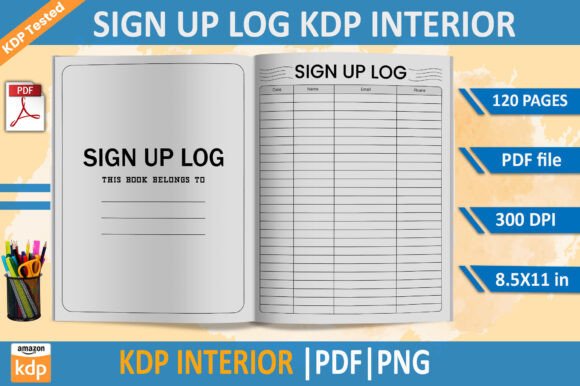
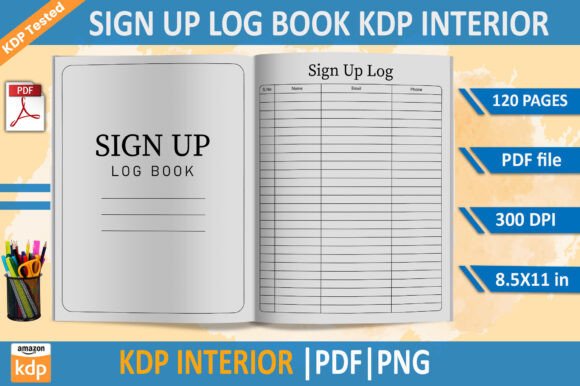
If you’re publishing a sign-up log book on Amazon KDP—and want it to look polished, professional, and ready for print without wrestling with bleed settings or DPI mismatches—you’ll appreciate how thoughtfully this Sign Up Log Book KDP Interior Template is built. It’s not just another generic PDF layout. This is a 120-page interior template rigorously tested across real KDP uploads, designed specifically for log books used in classrooms, events, workshops, salons, gyms, churches, and small service businesses.
Visually, it strikes a clean, functional balance: ample white space, consistent margins, subtle page numbers, and clearly labeled date/name/signature fields that guide users without overwhelming them. The typography leans into readability first—no decorative flourishes or tight kerning that sacrifices legibility. It uses a neutral, highly legible sans serif as the base typeface, with gentle visual hierarchy established through weight shifts (not font switching), so headers stand out while body lines remain comfortable to scan and fill in by hand or pen.
This isn’t a “designer’s showcase” font bundle—it’s a working tool. The Sign Up Log Book KDP Interior Template includes both a print-ready PDF (300 DPI, no bleed, 8.5×11 inches) and individual PNG pages at the same resolution. That dual format gives you flexibility: use the PDF straight for KDP upload, or drop PNGs into Canva, Adobe InDesign, or Affinity Publisher if you need to add custom headers, branding elements, or localized instructions. The transparent background on the PNGs means overlays integrate cleanly—no white boxes marring your layout when layering logos or watermarks.
Where This Template Fits Naturally
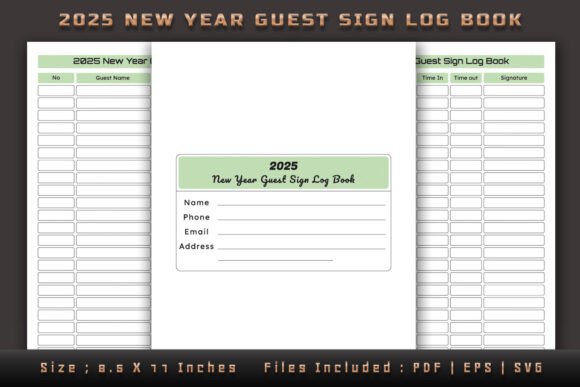
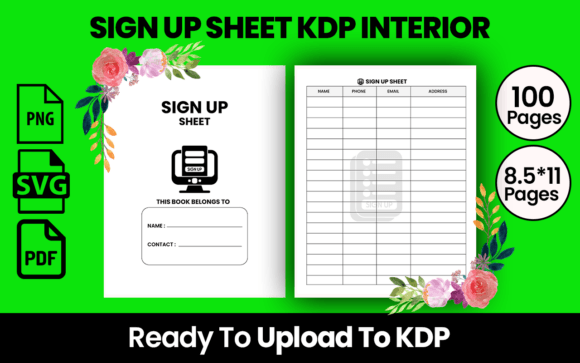
You’ll find the Sign Up Log Book KDP Interior Template especially effective in contexts where clarity, consistency, and ease of use matter more than stylistic flair. Think: volunteer check-in sheets at community centers, guest logs for boutique hotels, appointment trackers for independent therapists, or registration forms for weekend craft fairs. Its restrained aesthetic avoids competing with your brand—not hiding it, but supporting it.
It works well alongside serif body text in editorial design projects (like companion workbooks or resource guides), and pairs effortlessly with bolder display fonts for cover design. Because the interior doesn’t assert personality aggressively, it leaves room for your voice—whether that’s warm and approachable (using a friendly script for chapter titles) or crisp and corporate (adding a refined sans serif for section dividers). That adaptability makes it valuable across creative font applications: from packaging design (e.g., printed log books bundled with wellness kits) to social media graphics (where you repurpose blank page layouts as Instagram story templates).
Readability Isn’t Optional—It’s the Foundation
A log book only serves its purpose if people actually use it—and they won’t if the layout feels confusing, cramped, or inconsistent. This template solves common pain points head-on: generous line spacing (1.4x), clear label alignment, sufficient margin buffers around signature lines, and uniform spacing between rows. There’s no guesswork about where to write; each field has intuitive visual weight and placement.
That attention to readability directly affects audience engagement. A teacher using this for student attendance won’t waste time deciphering tiny labels. A wedding planner handing it to guests won’t get illegible scrawls in the “Name” column. And because it’s KDP-tested, you avoid last-minute formatting surprises—no unexpected cropping, no blurry text, no rejected files. That reliability builds trust, not just with end users, but with your own workflow.
Practical Tips Before You Download
Before grabbing your copy, consider how it aligns with your specific project:
- Evaluate your audience’s needs: Are users likely filling this out on a tablet? With gloves on? In low light? If so, prioritize larger input fields—this template allows easy resizing in editable versions.
- Test font pairings early: While the interior uses a neutral sans serif, try pairing it with one complementary typeface for headings—something with character but not distraction (e.g., a warm humanist sans like Lato or a quiet serif like Merriweather).
- Review licensing scope: This is a commercial-use template. You can sell printed log books on Amazon, Etsy, or your own site—no attribution required. But you may not resell the template itself or claim authorship of the underlying layout structure.
- Check your production chain: If you plan to add foil stamping, spot UV, or custom binding, confirm the PDF layers are flattened and fonts embedded. The included file is pre-optimized for standard KDP print, but specialty finishes often require minor prep.
Why “100 Tested” Actually Matters
“KDP-tested” isn’t marketing jargon here—it reflects real iterations. That means margins were verified against KDP’s latest trim tolerances, color profiles checked for grayscale accuracy (critical for black-and-white interiors), and pagination stress-tested across different paper stocks. It also means the 120-page count accounts for KDP’s requirement that interior files begin and end on right-hand pages—no blank filler pages needed, no awkward breaks mid-section.
For designers and self-publishers who’ve lost hours troubleshooting bleed warnings or pixelated text previews, this level of precision saves more than time. It reduces cognitive load. You’re not debugging layout—you’re refining messaging, improving user instructions, or focusing on how the physical book feels in someone’s hands.
The Sign Up Log Book KDP Interior Template doesn’t try to be everything. It does one thing exceptionally well: provide a dependable, print-ready foundation for log-based publications. Whether you're launching your third KDP workbook or your first community resource guide, having a proven interior template means you start from confidence—not confusion.