Sign Up Sheet KDP Interior: A Practical, Print-Ready Resource for Low-Content Publishers
For creators building a sustainable low- or no-content business on Amazon KDP, interior files must balance reliability, compliance, and efficiency. The SIGN UP SHEET KDP INTERIOR stands out not because it promises novelty, but because it delivers consistency where it matters most: print readiness, structural integrity, and workflow compatibility. It’s designed as a functional interior — not a decorative one — built specifically to support sign-up sheets used in workshops, community events, membership drives, volunteer coordination, or local service offerings.
What This Interior Actually Is — And What It’s Not
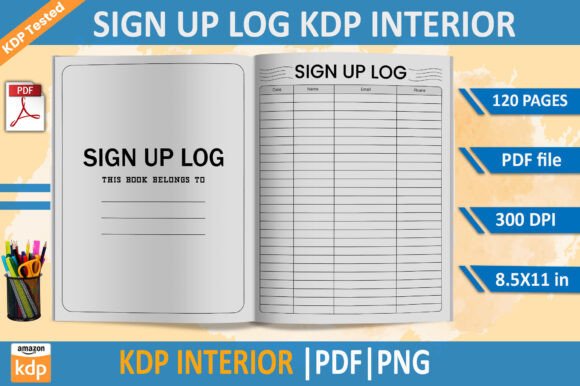
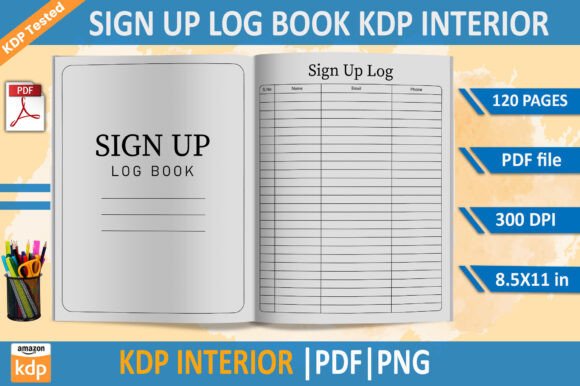
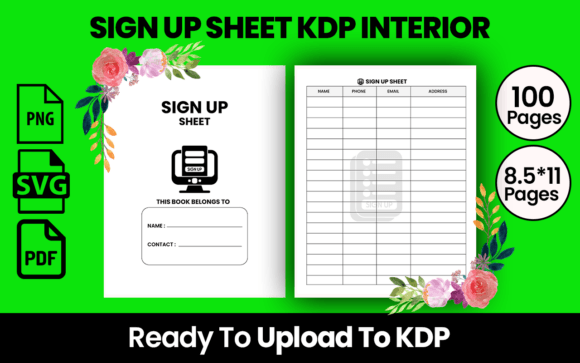
This is not a customizable template you edit in Canva or Word. It’s a set of three professionally formatted, pre-tested PDFs (100-, 110-, and 120-page versions), each structured for KDP’s requirements: 8.5″ × 11″ trim size, 300 PPI resolution, CMYK color mode, and no bleed. There are no placeholder graphics, no embedded fonts requiring licensing checks, and no hidden formatting quirks that trigger KDP warnings. Instead, it offers clean, consistent page layouts — one sign-up entry per page, with room for name, contact details, date, and optional notes — optimized for legibility and physical usability.
The package also includes an AI file (Adobe Illustrator) and high-resolution PNG assets, which matter if you plan to adapt the design later — say, to add your logo, adjust spacing, or rebrand for a niche audience. That flexibility isn’t theoretical; it’s built into the file structure. Unlike many KDP interiors that lock users into rigid, uneditable PDFs, this one gives technical access without sacrificing immediate usability.
Why Print Readiness Matters More Than You Think
KDP rejects roughly 12–18% of interior uploads due to technical issues — margins too tight, RGB color profiles, low resolution, or inconsistent page counts. The SIGN UP SHEET KDP INTERIOR avoids those pitfalls by design. Each PDF has been validated through actual KDP preview and soft-proofing cycles. Pages align correctly in the online previewer. Text remains crisp at 300 PPI. CMYK conversion preserves contrast without unintended color shifts. And because there’s no bleed, there’s no risk of content being cropped during trimming.
In practice, that means less time troubleshooting upload errors and more time focusing on cover design, pricing, or marketing. For someone managing multiple low-content titles — say, a small business owner offering seasonal sign-up sheets for holiday markets, summer camps, or fitness challenges — that reliability compounds across projects. One tested interior file can serve five different use cases with only minor cover adjustments.
Who Benefits Most — And When It Makes Sense to Use It
This interior suits professionals who need functional, trustworthy tools — not just visual flair. Educators organizing parent-teacher conference slots. Freelance event coordinators managing RSVPs for local networking mixers. Small yoga studios collecting class registrations. Community garden groups tracking plot assignments. In each case, the priority isn’t aesthetics first — it’s clarity, durability, and ease of use for both the organizer and the person signing up.
It’s especially useful when digital alternatives aren’t viable: venues with spotty Wi-Fi, audiences uncomfortable with online forms, or situations where a physical record adds legitimacy (e.g., liability waivers, consent forms, or handwritten commitments). A well-printed sign-up sheet conveys intentionality — and this interior supports that impression through clean typography, ample writing space, and consistent spacing.
Practical Considerations: Strengths, Limits, and Realistic Expectations
Strengths include its structural predictability (no surprises between pages), cross-format compatibility (PDFs work in KDP; AI/PNG files allow adaptation), and absence of unnecessary embellishment — which reduces ink costs and improves scannability. It also scales cleanly: whether you’re printing 25 copies for a workshop or ordering 500 through KDP’s expanded distribution, the layout holds up.
Limits are equally clear. It doesn’t include editable text layers in the PDFs — so if you need to change field labels (“Email” → “Preferred Contact Method”) across all 100 pages, you’ll need the AI file and basic Illustrator knowledge. It’s not designed for complex multi-step forms or conditional logic — think paper-based simplicity, not digital interactivity. And while the design is original and professional, it prioritizes utility over trend-driven visuals, so it won’t stand out in a thumbnail gallery the way a heavily illustrated journal might.
That said, standing out isn’t always the goal. For many buyers, a sign-up sheet is a tool — like a clipboard or a notebook. They want it to work, not wow. This interior meets that expectation reliably.
How It Fits Into a Broader Publishing Workflow
If you’re building a catalog of low-content products, consistency across interiors helps reinforce brand trust. Using the same base layout — even across different purposes (sign-up sheets, feedback forms, attendance logs) — creates subtle cohesion. You can pair this interior with a cohesive cover series (same font family, color palette, layout rhythm), making your KDP storefront feel intentional rather than scattered.
Also worth noting: the inclusion of multiple page counts (100, 110, 120) reflects real-world usage patterns. A 100-page version works for smaller events or short-term campaigns. The 120-page variant accommodates longer-running initiatives — like quarterly workshops or year-long community programs — without forcing awkward blank pages or last-minute resizing. That granularity saves time during product planning and avoids post-launch edits.
Final Thoughts: A Thoughtful, Grounded Choice
The SIGN UP SHEET KDP INTERIOR won’t replace custom development for enterprise-scale needs, nor does it aim to. But for solopreneurs, educators, and micro-businesses who value precision over polish, it fills a quiet but persistent gap: a dependable, no-fuss interior that works as promised, on the first upload. Its value lies in what it removes — friction, uncertainty, rework — rather than what it adds.
If your workflow involves regular, practical printables and you’ve spent time adjusting margins or converting color modes manually, this interior likely pays for itself in saved hours. And if you're expanding your KDP catalog with purpose-built tools — not just filler — it serves as a solid foundation for a category often overlooked: functional documentation, done well.