Plant Tracker KDP Interior
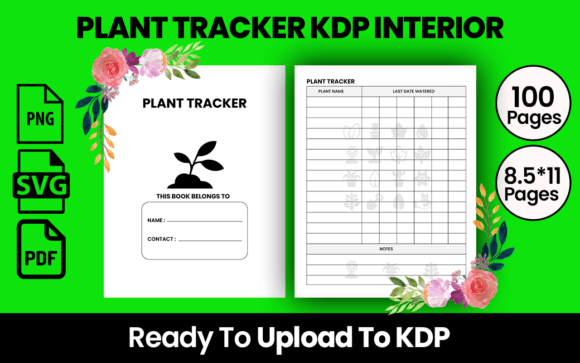
If you're building a low- or no-content publishing business on Amazon KDP, the PLANT TRACKER KDP INTERIOR isn’t just another template—it’s a purpose-built, production-ready asset designed to save time, reduce errors, and increase your launch velocity. This interior is built for creators who value precision over guesswork: it’s rigorously tested on KDP, optimized for print fidelity, and delivered in multiple formats so you can move from idea to live listing in under an hour.
At its core, the PLANT TRACKER KDP INTERIOR is a structured, minimalist journal layout tailored for plant enthusiasts, gardeners, educators, and sustainability-focused brands. But its utility extends far beyond hobbyists. Think of it as a flexible framework—clean, consistent, and intentionally uncluttered—that supports habit tracking, observational learning, inventory logging, or even client-facing plant care documentation.
What Makes This Interior Stand Out?
Unlike generic lined or dotted interiors, this design balances function with subtle visual intentionality. Every page includes clear section headers, intuitive spacing, and consistent margins—all calibrated for 8.5″ x 11″ trim size. No guesswork. No last-minute resizing. No KDP warnings about bleed or resolution.
Here’s what’s included—and why each detail matters:
- Three page count variants: 100, 110, and 120 pages—giving you flexibility for different pricing tiers, audience expectations (e.g., beginners vs. serious growers), and printing cost optimization.
- Three PDF files, all at 300 PPI and CMYK color mode—ensuring accurate color reproduction and sharp text/line art on physical copies.
- Print-ready AI file: Editable in Adobe Illustrator for custom branding, logo placement, or minor layout tweaks without compromising KDP compliance.
- High-resolution PNG version: Ideal for mockup creation, social media previews, or embedding into sales pages—no pixelation, no transparency issues.
- No bleed design: Fully aligned with KDP’s most common submission requirements, eliminating a top cause of rejection during upload.
This isn’t “good enough” formatting. It’s production-grade preparation—built by someone who’s uploaded hundreds of interiors and knows exactly where KDP’s automated checks trip up sellers.
Real-World Uses Across Audiences
A professional landscaper might bundle this interior with a branded cover as a premium add-on for new clients—helping them track watering schedules, pruning dates, and seasonal growth notes across properties. A biology teacher could assign it as a semester-long field journal, pairing printed copies with classroom instruction on photosynthesis, soil pH, or native species identification.
For digital creators, the PLANT TRACKER KDP INTERIOR works as a companion piece to content: a gardening YouTuber launches a $7.99 printable + paperback bundle; a wellness blogger uses the editable AI file to insert her newsletter signup QR code on the back matter page; a small-batch nursery adds their logo and plant care tips to the intro spread—turning a simple tracker into a subtle marketing tool.
Even solopreneurs testing niche viability benefit. Launching three variations (100/110/120 pages) lets you A/B test price points and perceived value without redesigning anything. You’ll quickly learn whether your audience prefers leaner, focused journals—or deeper, more expansive logs.
Design Integrity Meets Practical Efficiency
The interior uses generous line spacing and ample margin room—not just for readability, but because real people write with varying hand sizes, pen types, and pressure levels. Ballpoint users won’t bleed through. Fountain pen lovers won’t ghost. And left-handed writers won’t smudge half their entries.
Typography is clean and legible at 11 pt—not trendy, not distracting, but highly functional. Page numbers are discreetly placed. Section dividers use subtle horizontal rules—not heavy borders that compete with handwritten content. There’s zero decorative clutter. What remains is space that invites action, not hesitation.
That restraint is intentional. When your goal is usability—not Instagrammability—you prioritize clarity over ornamentation. That’s why the PLANT TRACKER KDP INTERIOR avoids watermarks, forced branding, or “inspirational” quotes that eat up usable space. It respects the user’s intent.
Smart Implementation Tips
Before uploading, double-check your cover dimensions match the selected interior page count—KDP calculates spine width automatically, but mismatched counts create awkward gaps or cramped spines. Use the 110-page variant if you plan to include a short introduction or resource page; reserve 100 pages for pure tracking efficiency.
When branding, leverage the AI file—but keep edits minimal. Adding a single-line footer with your website or social handle is effective. Overloading the header or margins risks crowding the functional area. Remember: this interior succeeds because it stays out of the way.
If you’re running ads or building an email list, use the PNG version to generate scroll-stopping flat lays and lifestyle mockups. Pair it with natural lighting and real plants—not stock imagery. Authenticity builds trust faster than polish ever will.
Why Consistency Matters More Than You Think
Every interior you publish shapes how buyers perceive your brand—even if you don’t think of yourself as a “brand.” A clean, consistent layout across your catalog tells customers you pay attention to detail. It signals reliability. It reduces cognitive load when they’re deciding between your $6.99 tracker and a competitor’s $5.99 version with blurry lines and inconsistent margins.
The PLANT TRACKER KDP INTERIOR delivers that consistency out of the box. No tweaking required. No second-guessing KDP guidelines. Just upload, preview, approve—and repeat across future titles.
And if you’re scaling beyond plants? The same structural logic applies. Swap “Watering Date” for “Client Follow-Up,” “Soil Type” for “Project Phase,” or “Growth Notes” for “Key Learnings.” The framework adapts—without sacrificing professionalism.
If you appreciate tools that work the first time—and keep working across dozens of titles—this interior earns its place in your workflow. It’s not flashy. It doesn’t promise viral growth. But it does deliver something rarer in self-publishing: quiet confidence in every page turn.